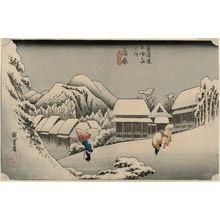
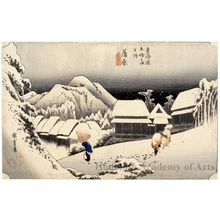
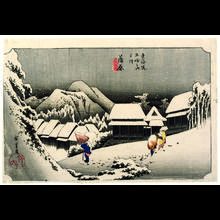
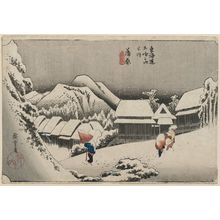
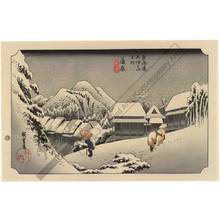
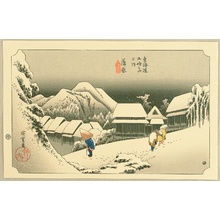
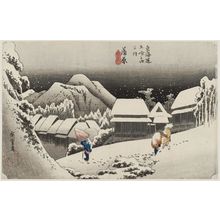
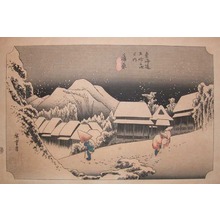
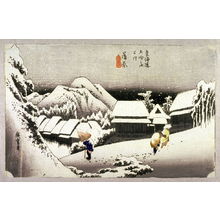
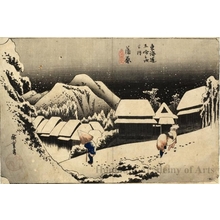
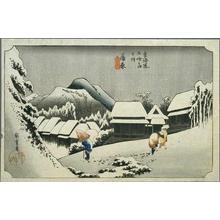
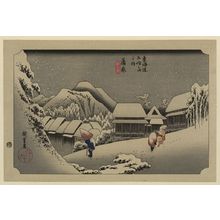
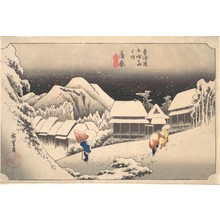
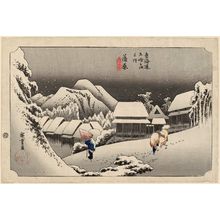
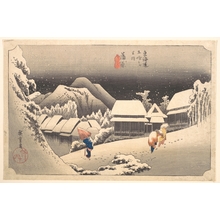
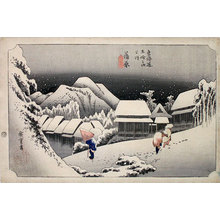
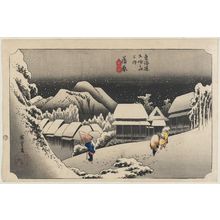
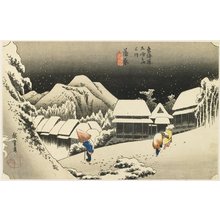
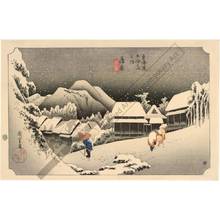
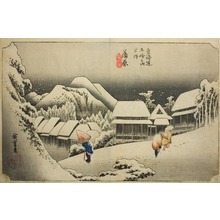
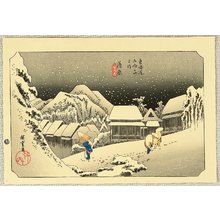
Utagawa Hiroshige创作的日本版画《Kanbara: Evening Snow (Kanbara, yoru no yuki)》
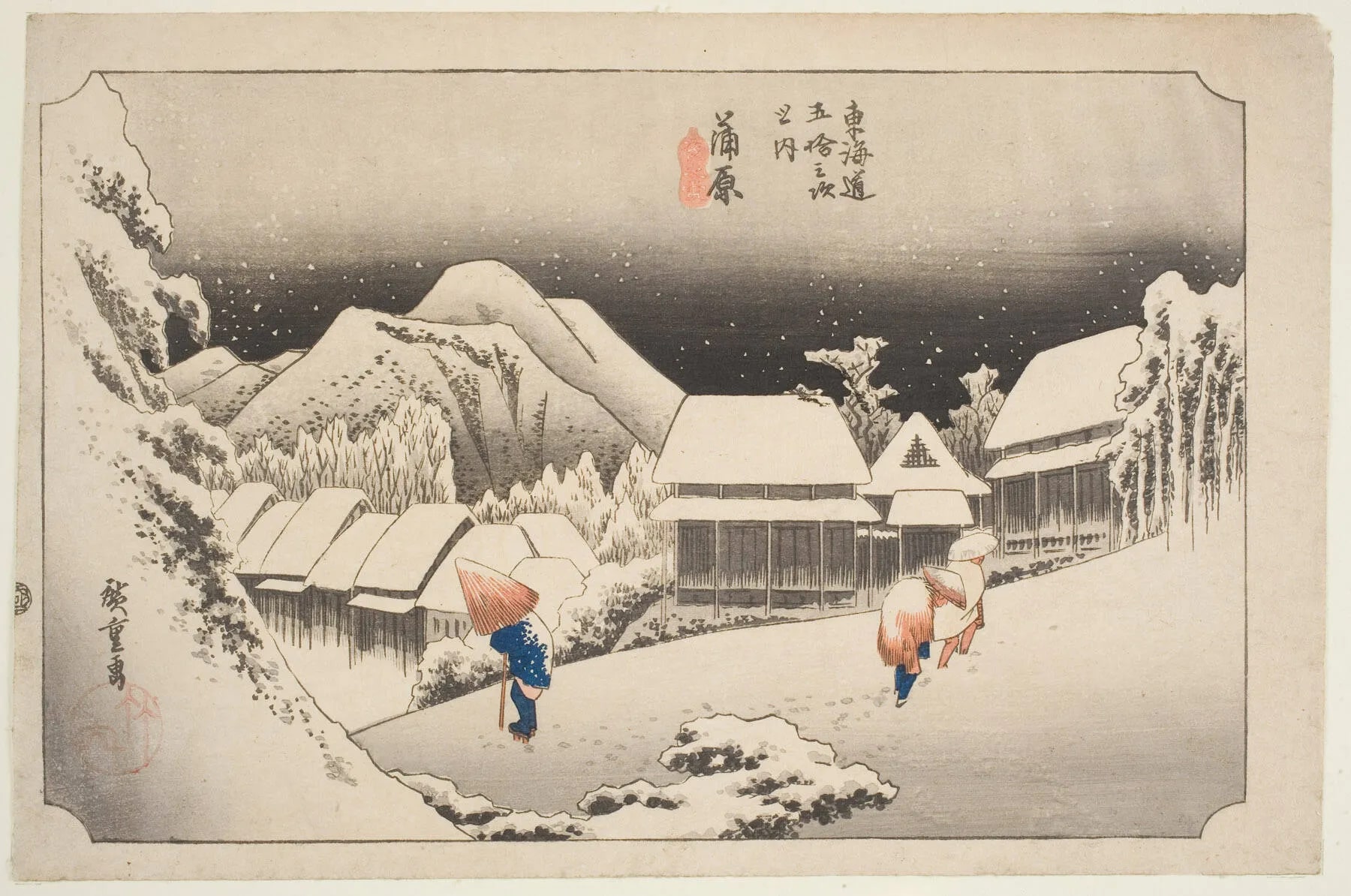
标题:Kanbara: Evening Snow (Kanbara, yoru no yuki)
日期:about 1833–34
详情:更多信息...
来源:Worcester Art Museum
浏览所有3,039幅版画...
描述:
No. 16 in the series Fifty-three Stations of the Tōkaidō comprises views along “Eastern Sea Road,” which connected he three largest metropolitan centers in Japan: Edo, Kyoto and Osaka. By Hiroshige’s time, it had transitioned from a somewhat hazardous but utilitarian route used by the emperor to a refurbished recreational one for travelers venturing into the countryside for sightseeing, pilgrimage, and adventure. The landscape was highly variable and full of famous sites, ensuring that the Tōkaidō had a special presence in Edo period (1603-1868) visual culture. Hiroshige portrayed it many times over the course of his career, but this series—the first exploring each station on the road—launched his celebrity and was widely coveted. As demonstrated here, while each print is totally distinct from the next, they all share similarly balanced compositions and imaginative uses of perspective. This print captures the pristine stillness of a village blanketed in snow in Shizuoka Prefecture. It is most likely that this scene was imagined, not observed, as this region rarely saw as much snow as is depicted. However, the familiar name still became a vehicle for Hiroshige’s portrayal of wintry quietude. There is no discernable light source, but the white of the landscape creates planes of negative space that seem to emit their own glow. This decision allowed Hiroshige to expand on the potential of the inherently graphic qualities of woodblock prints as a medium in unprecedented ways.
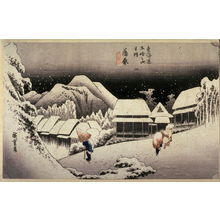
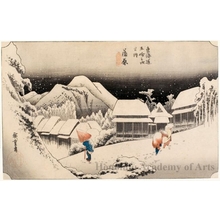
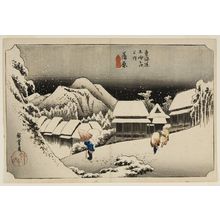
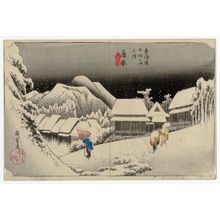
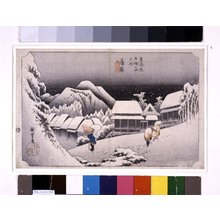
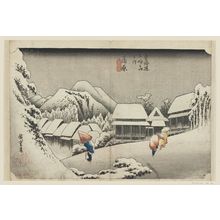
相似版画

![Ando Hiroshige, 歌川広重 (Andō Hiroshige)创作的日本版画《Kanbara [2nd edition]》](https://data.ukiyo-e.org/loc/thumbs/02112v.jpg "Kanbara [2nd edition]")